
Managing investment real estate in the desert comes with a unique set of regional challenges that can quickly erode your profitability if left unaddressed. From intense summer heatwaves stressing climate control systems to seasonal pest surges, tenant friction often boils down to a few highly predictable issues. This article covers the most frequent disputes landlords encounter across the Valley and outlines exactly how to mitigate them before they impact your cash flow. By understanding these friction points and implementing structured systems, property owners can protect their structural assets, improve retention rates, and maintain strict regulatory compliance.
Whether you are self-managing a single estate or partnering with an experienced Phoenix property management firm, taking a proactive approach is the single most effective way to eliminate landlord stress and maximize long-term yields.
1. HVAC Breakdowns: The #1 Complaint in Phoenix Rentals
In the extreme climate of the desert southwest, air conditioning is not a luxury or a seasonal convenience, it is a critical matter of statutory habitability. When temperatures consistently soar past 110°F, a broken cooling system can quickly spiral from a simple maintenance request into an emergency tenant grievance or a serious legal liability. Proactive maintenance and rapid-response vendor pipelines are essential to keeping properties safe and functional.
When an HVAC unit stops working in communities like Scottsdale, Peoria, or Surprise, the temperature inside a home can reach dangerous levels in a matter of hours. Under Arizona Revised Statutes (A.R.S. § 33-1324), landlords are legally mandated to maintain all electrical, plumbing, sanitary, heating, and air conditioning systems in a fit and habitable condition. A failure to address a cooling breakdown during extreme heat can grant a resident the legal right to break their lease, deduct repair costs from rent, or pursue damages.
Implementing a Preventive Maintenance Schedule
The most effective way to address HVAC complaints is to prevent the mechanical failure from happening in the first place. A professional property management strategy requires comprehensive system inspections twice per year: once in early spring before the summer heat arrives, and again in the autumn to prepare any heating elements for winter.
Additionally, forcing clean air filters into the system every 30 to 90 days reduces mechanical strain and prevents the evaporator coils from freezing over. Landlords can easily manage this by utilizing automated filter delivery services that ship the correct sizes directly to the property, shifting the replacement duty to the resident while tracking compliance during annual property safety evaluations.
Managing Repair Logistics with Structured Cost Controls
During the peak of the summer rush, independent landlords often find themselves waiting days or even weeks for an available HVAC technician. Working with an established local firm gives investors direct access to a dedicated, 24/7/365 emergency vendor network to ensure rapid dispatch times.
To protect owners from being blindsided by unexpected invoices during these high-stress situations, elite operational models employ a strict Cost Control Guarantee:
Automated Notifications: Property owners receive immediate email notifications for any standard repair tracking between $250 and $500.
Explicit Authorization: No non-emergency repair exceeding $500 is ever approved without the owner’s direct permission.
Emergency Overrides: True habitability emergencies (like an air conditioning failure when outdoor temperatures exceed safe thresholds) bypass standard approval limits to ensure the property remains legally compliant and the resident remains safe.
2. Pest Infestations: From Scorpions to Roof Rats
Living in close proximity to the Sonoran Desert means that local rental properties face distinct seasonal pest pressures, including scorpions, cockroaches, ants, spiders, and roof rats. These pests naturally seek shelter and water inside residential properties during extreme summer heatwaves or major monsoon storms. Establishing a consistent, preventative barrier treatment is the only reliable way to keep these pests out of your investment property.
Pest complaints frequently increase in high-growth suburban submarkets like Gilbert, Chandler, Queen Creek, and San Tan Valley, where newer residential developments border open, undisturbed desert terrain. When a tenant discovers scorpions or roof rats inside their home, their satisfaction drops immediately, which often leads to an uncomfortably tense landlord-tenant relationship.
The Power of Routine External Barriers
Waiting until a tenant reports an active pest infestation before taking action is a reactive approach that usually results in higher structural repair and extermination bills. A proactive Phoenix property maintenance strategy includes pre-scheduled quarterly pest control treatments that maintain a continuous chemical protective barrier around the entire perimeter of the home.
Structural Exclusion and Landscaping Controls
Physical exclusion tactics are just as important as chemical treatments. During routine annual property walk-throughs, inspectors check the integrity of the property's exterior seals. Key preventative steps include:
Caulking gaps around plumbing entry points, utility lines, and exterior doorways.
Ensuring weatherstripping fits tightly against all thresholds.
Trimming tree branches and heavy desert shrubbery back at least three feet from the roofline and exterior walls to eliminate natural bridges used by roof rats and scorpions.
Providing clear guidelines to tenants regarding proper trash storage and food management to remove pest attractants.
3. Noise & Neighbor Complaints
Noise disruptions, late-night parties, animal control issues, and neighbor disputes are persistent operational challenges that can quickly destabilize a rental property's neighborhood standing. Left unaddressed, these issues frequently turn into formal homeowners association (HOA) violations, municipal fines, or lease defaults. Landlords must use clear, upfront lease terms and neutral, documented enforcement to resolve these personal conflicts.
Neighbor disputes can happen anywhere, but they are a constant management concern in Master Planned Communities across Goodyear, Buckeye, Litchfield Park, and single-family neighborhoods in Sun City. Managing these situations requires a firm, professional approach that keeps the property owner insulated from personal neighborhood drama.
Setting Clear Expectations in the Lease
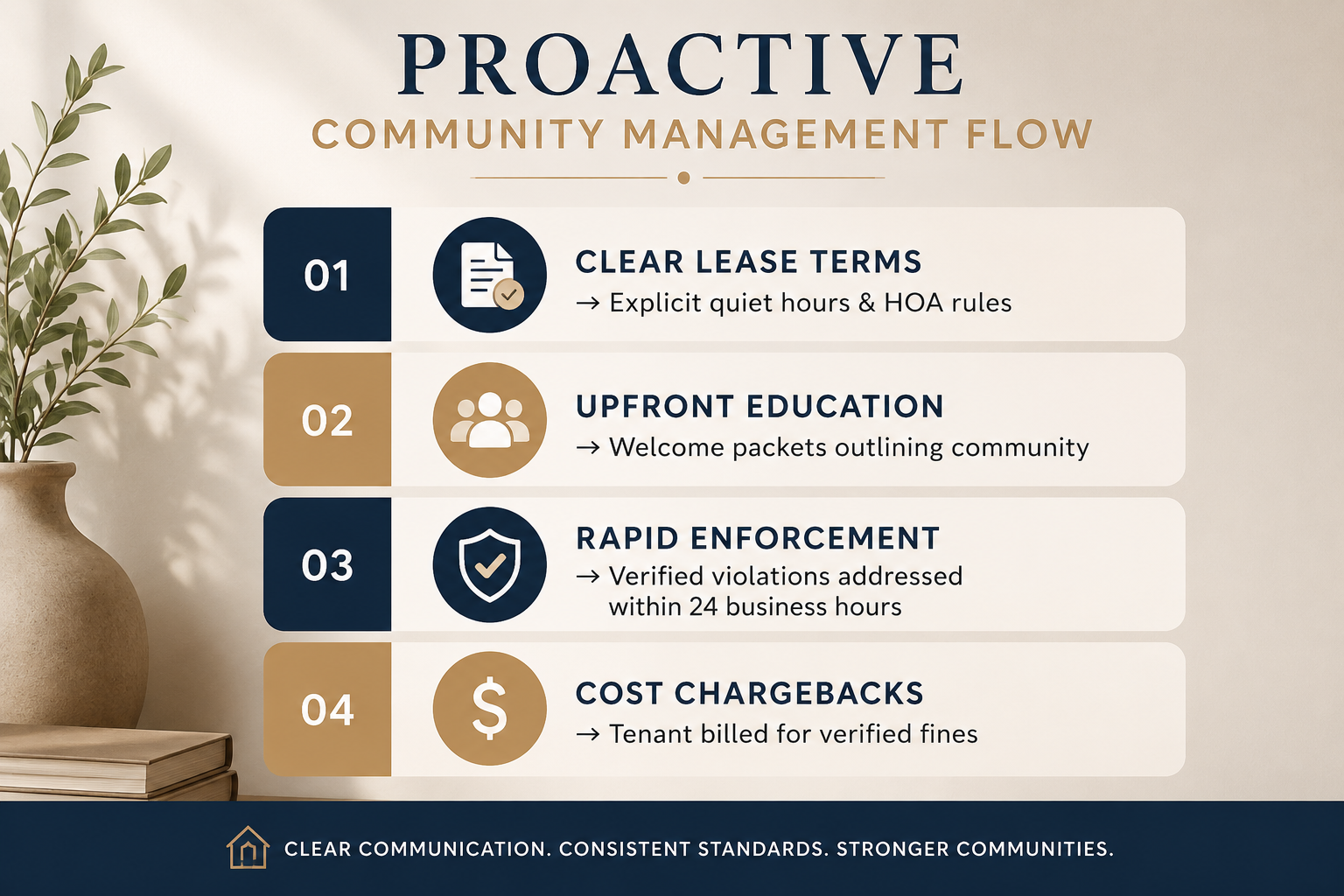
Setting clear expectations starts well before the tenant moves into the property. A comprehensive lease agreement must explicitly outline local quiet hours, community rules, and municipal noise ordinances. Reviewing these clauses during the onboarding process ensures the resident fully understands that keeping the peace is a non-negotiable condition of their tenancy.
Navigating HOA Violations and Financial Liability
If a resident triggers a formal HOA violation notice for noise, unkept landscaping, or improper parking, the property management team must act as a firm compliance enforcer. The standard operational policy for handling these notices includes:
Immediate Processing: The violation notice is forwarded directly to the property management portal for review.
Tenant Notification: The tenant is issued a formal warning detailing the compliance issue and the timeline required to resolve it.
Initial Payment Protection: To shield the property owner from escalating legal action or compounding interest from the HOA, the brokerage can coordinate the initial fine payment.
Tenant Reimbursement: The cost of the fine is legally charged back to the tenant's account and collected during the very next monthly rent cycle, keeping the property owner's financials entirely unaffected.
4. Delayed Repairs & Poor Communication
The issue:
Tenants quickly lose patience when repairs are delayed or communication is lacking. Even minor issues like a leaky faucet or broken appliance can cause frustration if ignored.
The solution:
Work with a property manager who offers:
24/7 maintenance request portals
Emergency service lines
Regular follow-ups on repairs
This keeps tenants informed, satisfied, and far more likely to renew their lease—helping you reduce vacancy loss.
Transitioning to Digital Accessibility and 24/7 Portals
To eliminate communication delays, modern property management workflows use secure, internet-based portals accessible to both tenants and owners. Tenants can log in at any time to submit detailed maintenance requests, upload photos of the issue, and track repair updates in real time. This transparency keeps the resident informed, reduces follow-up calls, and builds a professional relationship that supports high lease renewal rates.
Shifting Accountability with Performance Guarantees
A high-performing property management team handles tenant communications across the Valley—from Tempe and Mesa to Glendale and Downtown Phoenix—by standing behind clear, performance-backed service standards. These written commitments protect the investor's interests:
Reachability Guarantee: Staff members are contractually required to respond to all communications via phone, text, or email within 24 business hours. If the team fails to meet this responsive timeline, the property owner has the right to cancel their management agreement without penalty.
Happiness Guarantee: Property owners are never trapped in an unproductive contract; the entire management agreement can be cancelled without penalty at any point with a simple 30-day written notice.
Leasing Guarantee: If a placed tenant breaks their lease agreement early during their tenancy, a replacement resident is sourced, screened, and placed with zero additional tenant placement fees charged to the property owner.
Frequently Asked Questions
How fast must a landlord fix an air conditioning failure under Arizona law?
According to A.R.S. § 33-1324 and related municipal codes, air conditioning is considered an essential service in Arizona. Landlords must act quickly to resolve cooling failures during hot weather months. A failure to provide reasonable solutions or initiate repairs within statutory windows can expose the landlord to tenant-led legal remedies or lease termination.
Who is financially responsible for pest control in an Arizona rental property?
Generally, the landlord is responsible for providing a clean, pest-free home at move-in and maintaining the property's exterior structural integrity to keep pests out. If an infestation occurs due to tenant actions—such as improper trash disposal or poor cleaning habits—the tenant can be held financially responsible for extermination costs. However, regular preventative perimeter sprays are typically covered by the property owner to protect the asset.
How do professional management teams minimize vacancy losses when a tenant decides to move out?
To keep vacancies as short as possible, the lease renewal process begins proactively 60 days before the current agreement expires. If the resident plans to move out, the marketing process starts immediately. High-definition listing photos, virtual video syndication across 32+ platforms, and flexible showing schedules help secure a new qualified tenant quickly, often lining up the next move-in right after the previous tenant vacates.
What properties are subject to a standard 30-Day Rental Guarantee?
To qualify for a performance-backed 30-Day Rental Guarantee, the property must be vacant, entirely move-in ready, and professionally cleaned. The property owner must also agree to the professional market rent recommendation and allow up to two pets, which maximizes the property's visibility to the local tenant pool.
Want to Avoid These Complaints Altogether?
Managing tenant complaints, legal notifications, and midnight emergency maintenance calls can easily turn your investment property into an exhausting second job. Transitioning your assets to a professional team turns hands-on property management into a truly passive, profitable investment.
The team at Real Estate Brokers of Arizona uses over ten years of local real estate experience to provide property owners across the Valley with top-tier service for a simple, flat fee of $99 per month per occupied property.
Contact Real Estate Brokers of Arizona today or call 480-916-8900 to speak with a licensed professional and find out how our proactive maintenance programs and ironclad guarantees can protect your rental income.