
Buying your first residential property is one of the most significant financial and personal milestones you will ever achieve. While it is incredibly easy to fall in love with a home’s interior finishes, open-concept floor plan, or modern kitchen upgrades, the surrounding community ultimately exerts a far greater impact on your long-term happiness, daily routine, and investment yield.
As the Briley Brothers Team at Real Estate Brokers of Arizona, we have guided countless individuals through the nuances of the local market. We frequently consult with buyers who initially focused entirely on a specific house, only to shift their strategy once they thoroughly analyzed the surrounding neighborhood dynamics.
For first-time buyers navigating the competitive landscape of the Phoenix Valley, selecting the right location requires balancing near-term lifestyle needs with forward-looking financial forecasting. This comprehensive guide outlines the essential factors you should analyze when evaluating local communities, providing you with the expert insights needed to purchase your first home with absolute confidence.
What Are the Key Location and Lifestyle Factors for First-Time Buyers?
Selecting a neighborhood with optimal location and lifestyle factors requires balancing daily commuting practicalities with long-term community amenities. First-time buyers should carefully evaluate proximity to major employment corridors, regional public school rankings, and localized safety metrics to ensure day-to-day satisfaction. Prioritizing these foundational community indicators helps safeguard both your personal routine and your future property value.
Analyzing Daily Commutes and Regional Traffic Patterns
The foundational rule of real estate - location, location, location - remains completely undisputed. When examining potential neighborhoods, you must look closely at the realistic logistics of your daily commute to employment hubs, schools, family members, or frequent recreational activities. While purchasing a home further out in the suburban rings might offer more square footage for your dollar, a grueling daily drive can quickly drain your personal time and increase your stress levels.
Partnering with an experienced local real estate agent allows you to gain deep insights into regional traffic patterns, peak-hour bottlenecks along major freeways like the Loop 101, Loop 202, and I-10, as well as upcoming municipal transit or road widening projects that could fundamentally alter your commute.
School District Quality as a Long-Term Value Anchor
Even if you do not currently have children or plan to expand your family, the baseline quality of the local school district is a critical factor in determining your property's underlying real estate stability. Homes situated within highly rated, reputable school districts historically hold their value remarkably well during market adjustments, attract a larger pool of motivated buyers, and experience faster sales velocities.
Before submitting an official offer on a home, it is wise to research localized school boundaries and historical performance metrics. Property valuations can shift significantly simply based on which side of a district line a street falls on.
Safety, Community Dynamics, and Neighborhood Feel
Personal safety and peace of mind are non-negotiable priorities for first-time homebuyers. Looking beyond online crime statistics, the most effective way to truly gauge a neighborhood’s atmosphere is to physically walk the area at various times of the day and night.
Observing subtle indicators, such as whether families are utilizing local parks, neighbors are interacting with one another, or streets are well-lit after dark, provides a clear picture of the community's overall health. Visiting a local neighborhood coffee shop, attending a nearby open house, or driving through the subdivision on a weekend afternoon can help you see if a specific vibe matches your personal lifestyle goals.
Local Amenities and Lifestyle Alignment
Your neighborhood choice should directly complement your personal interests and day-to-day hobbies. Consider what amenities matter most to you:
Proximity to fitness centers, dynamic hiking trails, or municipal dog parks.
Walkability to local restaurants, specialty grocery stores, and retail centers.
Availability of green spaces, community pools, and shaded playgrounds.
A neighborhood that provides easy access to these features not only enhances your everyday convenience but also boosts your property's resale potential down the road.
How Do Financial Security and Long-Term Value Shape a Neighborhood Choice?
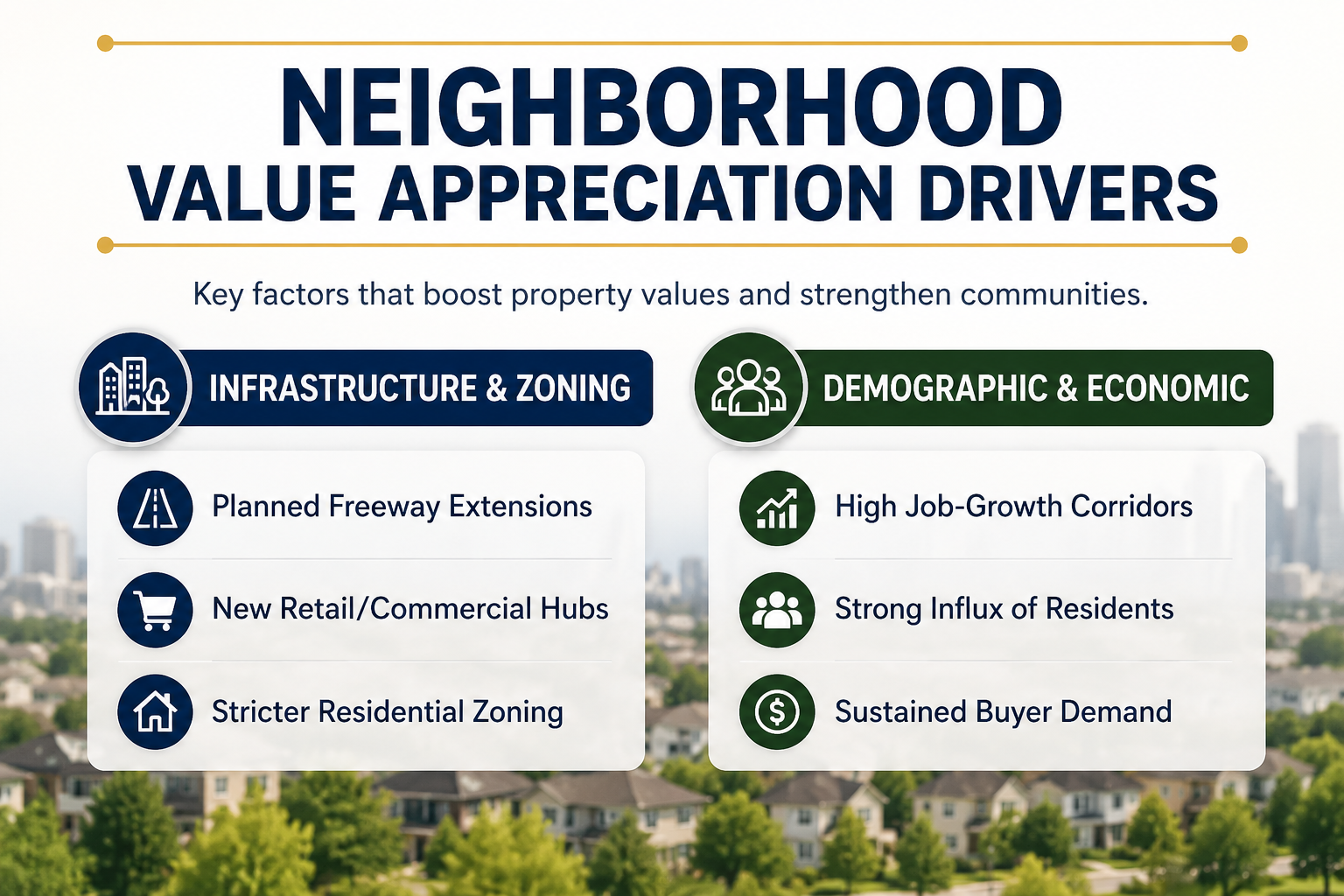
Real estate investment security depends on choosing a neighborhood characterized by steady historical appreciation, active economic growth, and stable future municipal zoning. First-time buyers must look past a property's immediate aesthetic appeal to evaluate neighborhood development pipelines, surrounding commercial investments, and historical comparable sales. This forward-looking financial evaluation ensures your home remains a resilient asset when it comes time to resell.
Long-Term Market Growth and Property Appreciation
First-time buyers naturally tend to focus heavily on their immediate upfront expenses, but smart real estate decisions require analyzing long-term historical and structural market trends. Is the specific neighborhood you are eyeing consistently appreciating in value, or is it showing signs of stagnation?
Utilizing advanced market analytics tools, such as a professional home value estimate, allows you to track property value trajectories across different subdivisions. A premier buyer's agent will guide you through detailed comparable sales data and neighborhood capital projections, ensuring you make an informed investment in a growing, resilient community.
Researching Zoning Regulations and Future Construction
A neighborhood's layout can change drastically over a five-to-ten-year horizon. Before committing your hard-earned capital to a property, it is essential to investigate surrounding land use designations and pending zoning adjustments.
An expansive, serene open desert view across the street could easily be slated to become a multi-family apartment complex, a major commercial retail strip, or a new freeway expansion within twenty-four months. Gaining early insight into municipal development plans, zoning classifications, and active builder contracts helps protect you from unexpected surprises that could impact your property's future view, noise levels, or market value.
Resale Potential and Market Fluidity
While it might seem premature to think about selling a home you haven't even purchased yet, the average first-time buyer moves within five to seven years. Buying in a neighborhood with strong resale potential ensures you won't be stuck with an illiquid asset when life changes require you to upgrade or relocate. Homes located near strong economic drivers, accessible community infrastructure, and low-crime sectors inherently retain market demand, making your eventual transition smoother and more profitable.
What Are the Hidden Costs and Administrative Rules of Local Neighborhoods?
The true affordability of a neighborhood extends far past the initial mortgage payment to include Homeowners Association (HOA) monthly assessments, localized property tax variations, and strict community architectural guidelines. First-time buyers must thoroughly review all subdivision rules and financial disclosures during their standard contract contingency period to avoid unexpected financial liabilities. Ensuring these ongoing overhead fees fit comfortably within your budget prevents long-term financial strain.
Navigating Homeowners Association (HOA) Regulations and Fees
A vast majority of modern planned subdivisions across the Valley are governed by a Homeowners Association (HOA). While an active HOA can be highly beneficial by enforcing structural upkeep, maintaining common green spaces, and preserving uniform property values across the neighborhood, they also introduce distinct lifestyle restrictions and mandatory monthly or quarterly financial assessments.
As a first-time buyer, you must carefully read through the complete Covenants, Conditions, and Restrictions (CC&Rs) during your contract contingency window. Certain associations enforce strict guidelines regarding:
Parking commercial vehicles, trailers, or recreational vehicles (RVs) in driveways.
Pre-approved exterior paint colors, structural additions, or backyard landscaping.
Strict limitations or licensing requirements for utilizing the property as a future rental asset.
Aligning Purchase Budgets with Total Cost of Ownership
It is remarkably easy to get swept away by a charming, tree-lined street or a high-end gated community, but strict fiscal discipline should always anchor your ultimate purchasing decision. Your monthly housing overhead is comprised of much more than just principal and interest payments.
You must accurately account for localized property tax rates, comprehensive homeowners insurance premiums, municipal utility costs, and potential HOA special assessments. Evaluating these variable figures ensures your total monthly housing cost fits comfortably within your budget, allowing you to maintain financial flexibility.
Why Is Having an Experienced Realtor Critical When Choosing a Neighborhood?
Partnering with a highly knowledgeable real estate professional provides first-time buyers with access to hyper-local market data, upcoming zoning changes, and experienced contract negotiation strategies. A skilled agent guides you smoothly through complex legal frameworks, local disclosures, and the entire close of escrow sequence. This professional protection minimizes transaction risk and ensures you invest in a neighborhood aligned with your personal and financial goals.
Navigating the multi-step journey of buying a home requires much more than simply browsing online listing portals. Working alongside an elite real estate team provides you with a dedicated advocate whose primary objective is protecting your financial and legal interests. From matching your lifestyle wish list with a realistic budget to executing strategic contract negotiations, an experienced working with a buyer's agent partnership streamlines the entire transaction from start to finish.
Your real estate professional oversees the essential legal steps of the transaction, ensuring the seller delivers a comprehensive Seller's Property Disclosure Statement (SPDS), coordinating independent property inspections, and verifying that the title record is completely clear of liens. This thorough, professional approach insulates you from hidden liabilities, paving the way for a smooth close of escrow.
Frequently Asked Questions
How do school districts affect home values if I do not have children?
Homes located within highly rated school districts consistently command stronger buyer demand across all market cycles. When it comes time to resell your property, a top-tier school district expands your prospective buyer pool to include families with young children, which preserves your property value and supports a faster sale velocity.
What should I look for in neighborhood HOA documents before closing?
You should closely examine the association's total financial reserves, historical fee increase trends, and any pending special assessments for capital improvements. Additionally, review the community guidelines regarding parking restrictions, allowable pet breeds or quantities, and specific rules for exterior home modifications.
How do future zoning changes impact residential property values?
Zoning changes can significantly alter a neighborhood's dynamic. If surrounding vacant land is rezoned for commercial shopping centers or employment hubs, it can increase local convenience and drive home values up. Conversely, if a nearby zone is modified for heavy industrial use or high-density transit corridors, it may introduce unwanted noise and traffic, potentially impacting residential demand.
What is the most effective way to gauge a neighborhood’s safety before making an offer?
While reviewing crime mapping data provides a helpful baseline, the most reliable approach is firsthand observation. Walk or drive through the community at multiple times during the week and weekend, converse with local residents at nearby parks or businesses, and check the structural upkeep of neighboring properties.
Find Your Ideal Arizona Community
Finding the right home begins with choosing the right neighborhood. Partnering with a premier, licensed real estate team ensures you locate a community that supports your lifestyle while protecting your long-term financial security.
The Briley Brothers Team at Real Estate Brokers of Arizona blends deep local knowledge, data-driven market insights, and a 5-star customer service record to assist first-time buyers in identifying and securing prime properties throughout the region. Whether you are focused on urban accessibility or master-planned suburban comfort, our team guides you through every phase of the home-buying journey with precision and care.
Connect with the Briley Brothers Team today or call 480-916-8900 to speak with a dedicated real estate professional and take the first confident step toward purchasing your new home.